A Slow Autumn Ride, Planned Around the Shortening Day
Plan a slow autumn ride around daylight, comfortable pauses and an early return, so the route stays calm when the afternoon light begins to fade.
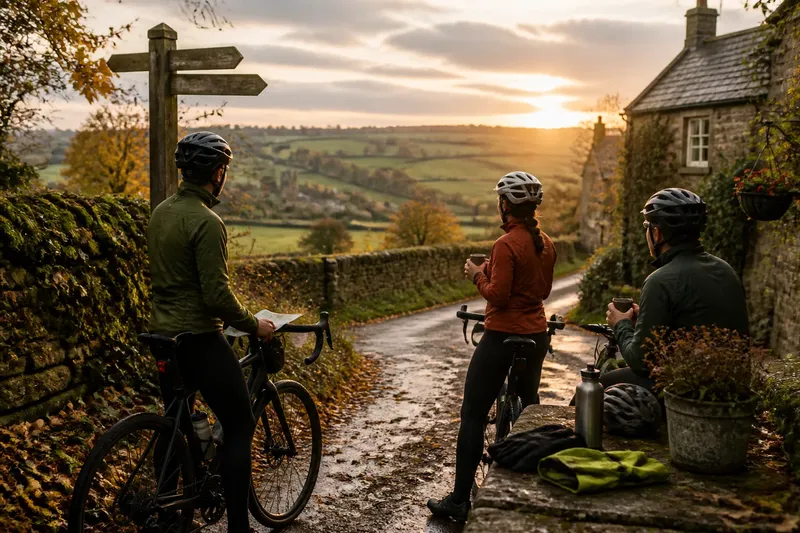
The common mistake in planning a slow autumn ride is to copy a summer route and leave earlier. The cost is often a hurried return: pauses get cut short, familiar lanes feel less forgiving in fading light, and the outing ends with everyone watching the clock. Build the day around the return instead, then let the outward ride fill the space that remains.
Autumn changes more than the view. A low sun can make a lane harder to read, damp leaves may hide the surface, and a café stop can take longer once a group has settled in. None of that calls for a grand expedition plan. It calls for a modest route, a clear turning point and permission to finish with daylight still in hand.
Autumn ride timing
Start by deciding when you want to be back, not when you want to set off. Use a local sunset time as a boundary rather than a target; the useful return is earlier, with enough light for an unhurried final stretch and the ordinary delays of a rural day. The exact margin depends on the route, weather, riding group and how familiar the lanes are.
Then work backwards. Allow for changing clothes, a drink, a puncture pause or a closed gate, as well as the ride itself. If the day’s available light looks tight on paper, shorten the route before setting out rather than expecting the group to ride faster later.
Choose a modest distance by considering the slowest rider and the least familiar section. A short lane network with a village stop can make a better autumn outing than a long loop whose far end is difficult to abandon. A map app such as Komoot or a paper Ordnance Survey map can help show where a shorter return is possible; check the route on the ground against signs and access rules.
Late returns
What causes it: A route looks compact on a screen, but the plan leaves little room for the ordinary business of riding: regrouping after junctions, checking a map or waiting while someone adjusts a layer. Autumn makes those pauses more attractive, not less.
What to try: Set a firm turning point and a time to reach it. If the group arrives later than planned, take the nearest sensible way back rather than treating the original loop as a promise. For a ride with several possible shortcuts, note them before departure and agree that anyone can suggest using one without turning the decision into a committee meeting.
Imagine you have chosen a quiet loop from a village green, with a bakery stop and a lane that returns through open fields. If the stop runs long and the group reaches the far junction behind schedule, the agreed shorter lane back preserves the pause and brings the ride home earlier. The observable result is a relaxed return, rather than a hurried attempt to keep every mile in the plan.
Cold, damp pauses
What causes it: A rider feels comfortable while moving, then cools quickly while standing beside a hedge or outside a café. A sunny forecast can also disguise a shaded lane where the air feels colder and the road stays wet.
What to try: Pack a light extra layer that is easy to put on over cycling clothes, and keep it accessible rather than buried under food. A windproof jacket, thin gloves and a dry neck warmer may be more useful than another snack. Bring a small cloth for wiping glasses and check that the chosen stopping place has somewhere sheltered to pause.
Keep the stop deliberate. A warm drink in a village café can be the centre of the outing, but lingering in damp kit may make the ride home less pleasant. Agree on a comfortable break before leaving, then decide on the day whether the group wants to extend it. The plan should accommodate a pause, not turn it into a test of endurance in cold clothing.
Low light and leaf cover
What causes it: A familiar road can look different when the sun sits low across it. Glare softens detail, while wet leaves and shaded patches can obscure potholes, gravel or the edge of the tarmac. A route that was easy to read in summer may need more attention now.
What to try: Prefer lanes where the group can ride at a comfortable pace and see enough ahead to respond to the surface. Slow down before shaded corners and avoid assuming a brown or golden patch is harmless. Keep front and rear lights available even if the ride is planned for daylight; they help others notice a cyclist when the light is dull. Check the lamp instructions and local requirements for fitting and use.
Route choice matters too. A short approach on a busier road may be preferable to a long detour on a narrow lane with poor sight lines, but that is a judgement for the riders and conditions. If a stretch feels uncomfortable, dismount where safe and reconsider the route rather than pressing on because it appeared quiet on a map.
What needs checking?
How do I choose a return time?
Use the local sunset as a boundary and choose an earlier return that allows for stops, slower riding and small delays. If the group is unfamiliar with the route or the forecast is unsettled, leave more room rather than trying to calculate a precise arrival.
How far should an autumn ride be?
Choose a distance that leaves time for a proper pause and a calm return at the slowest rider’s pace. A route with an easy shortening option is usually more adaptable than one that reaches a distant point before turning home.
What should I carry for a short ride?
Bring water, a small repair kit suited to your bicycle, a pump, a phone or map, and an extra layer. Lights are sensible even for a daytime plan, as cloud, shade or delay can change how visible the group is.
Should I cancel if rain is forecast?
Consider the expected conditions, the route surface and the group’s comfort rather than treating every shower as a reason to cancel. If rain, wind or poor visibility would make the chosen lanes unpleasant or difficult to manage, shorten the ride, choose a more suitable route or postpone it.
A calmer route home
Make the final section easy to follow. A return through a familiar village or along a clear signed road can reduce the need to stop and consult a phone as the light changes. Save the map offline if using an app, and keep the paper map accessible if that is your preference. Agree where the group will regroup after junctions, particularly if riders have different paces.
Tell someone at home the broad route and expected return if that is part of your usual riding arrangements. Carry a charged phone, but do not make the route depend on a signal in every field. Where the right choice depends on a bicycle’s instructions, a road rule or a local access restriction, check the relevant source before the ride.
A slow autumn ride works best when the return is part of the pleasure rather than an interruption to it. Keep the route modest, protect time for one good pause and treat the early finish as a deliberate choice. The shortening day then becomes a useful boundary: it gives the outing shape, and leaves the last light for getting home without haste.