The Quiet Geography of a Lane Bend
A lane bend changes what you can see and when; learn to read its near and distant views so the road’s character becomes part of the ride.
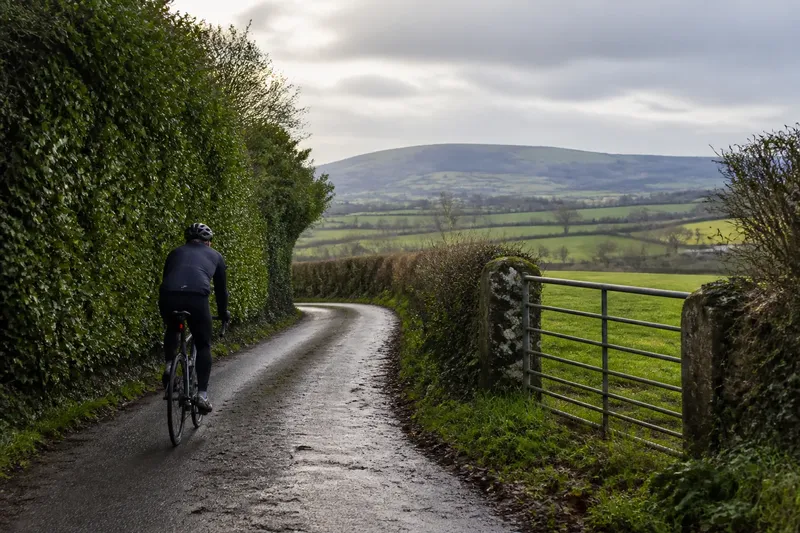
The common mistake on a country lane bend is to treat it as a small interruption between straights. That can cost the ride its best detail: a view that arrives in stages, with a hedge, wall or bank briefly keeping the landscape to itself. The quiet geography of a lane bend lies in that sequence of near and distant views, and noticing it makes a familiar road feel less like a line on a map.
What does a bend conceal?
A bend conceals whatever lies beyond its inner edge, but the shape of that concealment varies. A high hedge can hide a field until the lane has almost turned away from it. A low stone wall may reveal the slope behind it while still withholding the next stretch of road. On a wooded lane, trunks screen the view in narrow strips; on open farmland, a shallow curve can make a distant hill appear to slide sideways rather than disappear.
The near view is often the first to change. A ditch, verge, gatepost or patch of gravel comes into view before the wider landscape does. Those small features establish the bend’s scale. A close hedge can make a broad curve feel enclosed, while a broad view across pasture can make a tighter turn seem less abrupt than it is.
What a rider can see also depends on the direction of travel. Approaching from one side, a bend may present a wall and a dark gap between trees. Coming back the other way, the same turn may open towards a farm roof or a pale strip of sky. The road has not changed; the order of its clues has.
Why do the views arrive in sequence?
A bend works like a moving frame. As the bicycle advances, the angle between the lane and nearby boundaries changes, so one feature slips behind another and then returns in a new position. The result is not a single panorama but a succession: verge, hedge, opening, field, distant ridge. Even a modest curve can give the eye more to do than a long straight road.
Distance contributes to the effect. A gate close to the road shifts across the view quickly; a copse beyond the next field seems to move slowly. When both appear together around a bend, their different rates of movement make the landscape feel layered. The rider’s attention passes from the near edge of the lane to the farther ground, then back to the road ahead.
This is one reason a lane can have a distinct character without a famous landmark. Its identity may come from the way it parcels out ordinary scenery: first an old ash tree, then a pale wall, then a glimpse of a valley that vanishes as the road turns. No single feature has to carry the whole impression.
How can you read a bend while riding?
Read the bend in two ways at once: keep attention on the road surface and likely traffic, while allowing the view to register at its edges. A changing hedge line, a wall that angles away or an opening between trees can suggest how the road continues. None of these visual clues replaces seeing the usable road ahead. A bend that hides its exit also hides whatever may be approaching from the other direction.
On a narrow lane, keep to a position that leaves room for an oncoming vehicle and avoids loose gravel or broken edges. Do not cross towards the centre simply to improve the view. If visibility is limited, reduce speed enough to respond to what is actually visible, rather than riding on the assumption that the bend is clear. The landscape can be admired without asking it to serve as a traffic forecast.
Imagine you are riding towards a left-hand curve bordered by a tall hedge, with a field gate set just before it. You notice the gate and the hedge’s changing line, ease your pace, and hold a road position that leaves space for a vehicle coming the other way. As the lane turns, a distant ridge appears through a gap; the expected result is a safer, more attentive passage in which the view arrives as part of the ride, not as a reason to take a blind line.
Afterwards, a short note on a map or route app can help you remember the bend’s character. “Hedge closes in, ridge appears beyond gate” is more useful than “nice corner”, particularly if you intend to ride the lane in the opposite direction. Keep the note about scenery separate from any warning about road conditions, which can change.
What changes with the season?
Leaves alter the boundary between near and far. A lane screened by summer foliage may become more open when branches are bare, though hedges and evergreen trees can still block the view. In spring, young leaves may create a thin veil rather than a solid wall. The bend can therefore feel different on a return visit even when its geometry is unchanged.
Light matters as well. Low sun can brighten a field beyond a shaded bend while leaving the lane itself dim. In overcast weather, the distant view may lose contrast, and gaps that once seemed to frame a hill may merge into a grey background. Wet leaves, mud or standing water are reasons to give the road surface more attention, not to linger over a view.
Seasonal change also rearranges the details nearest the road. A verge may be cut back, a field crop may rise above a gate, or a bare ditch may become hidden by growth. These shifts affect the visual sequence: what used to appear first may now be screened, and a familiar opening may feel newly narrow.
How does the bend shape the route’s character?
A route’s character is often remembered as a pattern rather than a list of places. Repeated enclosed turns can make a lane feel intimate and unhurried. A bend that releases a wide view after a stretch of high banks creates a small sense of arrival, even if the view is only a field and a line of trees. Several gentle curves can make the countryside seem to unfold rather than sit beside the road.
This matters when choosing between two ways through the same area. A map shows direction and distance, but it does not describe whether the road keeps views close, reveals them abruptly or offers a long sequence of openings. Street-level mapping and photographs can suggest the boundaries, though they cannot show every seasonal change or the experience of travelling in the reverse direction.
When describing a lane to another rider, name the order of views rather than praising it in general terms. “The wall drops after the second bend, and the valley opens on the right” gives a more useful picture than “scenic road”. It also helps someone understand why the lane is worth taking, without implying that the view will be identical in every season.
Which details make a bend memorable?
Why does a hedge feel different from a wall?
A hedge has an irregular edge, with gaps and branches that can reveal fragments before the full view opens. A wall gives a firmer line and may keep the scene beyond it hidden until the road’s angle changes. Both can frame a bend, but they create different rhythms of concealment.
Does a small opening matter?
Yes, because a gap can offer a brief view of a field, stream or distant slope without exposing the whole landscape. Its short appearance gives the ride a clear visual beat: the lane encloses, the opening releases, and the boundary closes again.
Can the same bend feel different in reverse?
It can, because the foreground features arrive in another order and distant landmarks may sit on a different side of the road. A bend that seems to reveal a valley when approached one way may feel enclosed from the other direction.
What should a rider remember first?
Remember what the view does, but give the road priority. A changing boundary can make a bend memorable; it cannot tell you that the hidden stretch is free of traffic, debris or a farm vehicle.
What to notice next time
On your next quiet country ride, choose one bend and watch how its view is assembled: the nearest surface, the boundary that hides the road, the first opening and the farthest feature you can see. Notice which of those changes when the lane is ridden in reverse. This is the quiet geography of a lane bend in practical terms—not a reason to look away from the road, but a way to recognise how the road lends the landscape its pace.
A bend need not offer a grand prospect to reward attention. Sometimes its whole character rests on a gatepost that appears before a hill, or a hedge that gives way for only a few pedal strokes. Those are small observations, but they are often what make one ordinary lane stay in the mind after the map has been put away.