The Matching-Kit Myth: Why a Ride Need Not Look Uniform
Matching cycling kit is optional, not a rule. Learn how to choose comfortable layers, colours and useful pieces without dressing as a set.
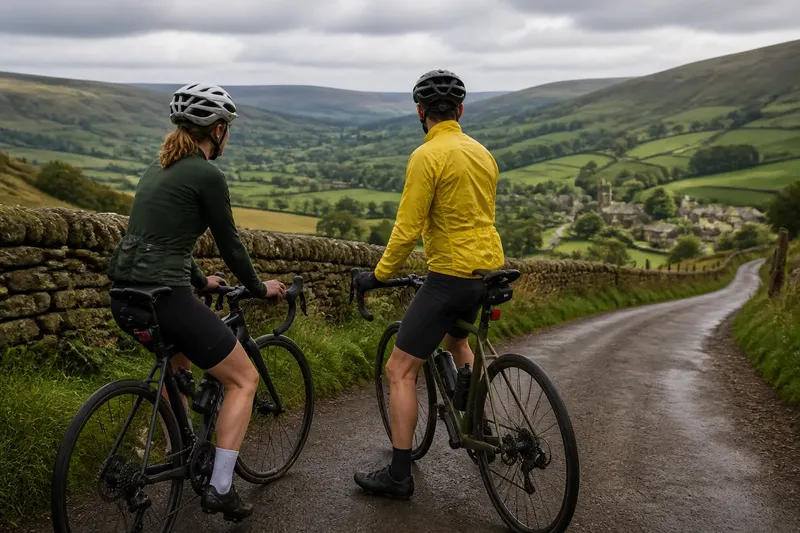
The most common mistake about cycling kit is assuming every piece must match; it can turn getting dressed for a ride into an unnecessary shopping problem. Matching cycling kit is a preference, not a condition of looking at home on a country lane, and a comfortable mix of useful clothes is often the more sensible choice.
1. Separate comfort from coordination
A coordinated jersey and bib shorts can look tidy, but the visual effect does not make the clothes more suitable for riding. Fit, fabric, pockets and weather protection matter independently of colour. A well-fitting jersey in one shade and shorts in another remain a perfectly coherent outfit, even if no one has designed them as a pair.
Start with the clothing you already reach for because it sits comfortably on the bike. Check whether the jersey stays in place when you lean forward, whether the shorts allow you to pedal without bunching, and whether you can reach anything you need to carry. Those details affect the ride; matching panels do not.
This does not mean appearance is irrelevant. Some riders enjoy choosing a palette, and there is no reason to pretend otherwise. The useful distinction is between dressing deliberately and believing that deliberate dressing requires buying a complete set.
2. Choose a colour anchor
If a mix of colours feels accidental to you, choose one item as an anchor. It might be a navy jersey, dark shorts, a bright gilet or a cap with a colour you like. Let the other pieces either repeat that colour or sit quietly beside it. This creates a considered look without demanding identical branding or a matching collection.
Neutral shorts are especially easy to combine with jerseys in different colours. Alternatively, a plain jersey can balance patterned socks or a vivid jacket. There is no need to coordinate every small detail; too much matching can make an outfit look more planned than the ride itself.
For instance, say you have charcoal bib shorts, a green jersey and a yellow waterproof jacket. You might keep the shorts as the neutral anchor and use the jacket only when the weather calls for it; the expected result is a practical combination that still looks intentional, without buying another jersey to complete a set.
3. Let the route set priorities
Country riding brings changing surfaces, exposed stretches and stops at village shops or a pub. Clothes that work across those conditions may not form a neat colour story. A light windproof layer can be more useful than a perfectly matched top, while a spare pair of gloves may earn its place even if the shade is unrelated.
Think about what the ride asks of your clothing: ventilation on a climb, a layer for a breezy ridge, or pockets for a snack and a phone. A gilet can be rolled into a jersey pocket when it is not needed. A rain jacket may be bright for visibility or simply the one that fits over your layers. These are functional choices, not styling failures.
Labels and manufacturer instructions matter for care and use, and local requirements may apply to lights or other equipment. For clothing choices, though, the practical question is whether the pieces suit the conditions you expect and allow you to ride comfortably.
4. Make old kit earn its place
Many riders accumulate clothing from different seasons, clubs, events or gifts. Treating those pieces as a usable wardrobe is more sensible than retiring them because their logos or colours do not match. A faded jersey may still have sound seams and working pockets; an older gilet can be useful over several different tops.
Check each item for fit, wear and function before deciding whether it belongs in the riding drawer. Look for stretched cuffs, damaged zips, thinning fabric or a pad that no longer sits comfortably. If it remains suitable, let it serve its purpose. If it does not, matching the rest of the outfit will not rescue it.
Club clothing can carry a different kind of meaning. Wearing it may signal membership or affection for a group, but it need not dictate every layer. A club jersey with plain shorts is still club kit. So is wearing the jersey under a neutral jacket when the weather changes.
5. Use small details sparingly
Socks, caps, gloves and overshoes can add colour without requiring a whole new outfit. One repeated accent—perhaps a red cap with a small red detail in the jersey—can tie things together. But accessories are also easy places to prioritise usefulness: gloves that fit, socks that do not slip and overshoes that suit the conditions deserve attention before their colour.
Try not to make every accessory compete for notice. If the jersey is patterned, plain socks and gloves can keep the look calm. If the clothing is simple, a colourful cap or pair of socks can provide the only flourish. Either approach is enough; a bicycle ride is not a travelling display window.
6. Dress for your own company
Riding alone removes the imagined audience that often makes kit feel more consequential than it is. With friends, a group may have club colours or a shared event top, but no general rule says everyone must dress alike. Personal preference can coexist with the ordinary courtesy of not making someone else’s clothes a topic for inspection.
Some riders like a clean, coordinated look; others prefer a dependable assortment assembled over years. Both are normal. If you enjoy choosing a matching set, wear it because you like it. If you would rather pair a favourite jersey with comfortable shorts and a weatherproof layer, that is a complete decision too.
What should cycling kit match?
Do cycling jersey and shorts need to match?
No. They need to fit comfortably and suit the ride; matching colours are an optional aesthetic choice. A neutral pair of shorts can work with many jerseys.
Can I mix cycling brands?
Yes. Clothing from different brands can be worn together if the fit and features work for you. A logo does not create a requirement to buy the rest of the range.
How can I make mixed kit look deliberate?
Choose one colour as an anchor, then keep the other pieces simple or repeat that colour in a small detail. You do not need to coordinate every accessory.
Should I buy a matching cycling kit set?
Only if you like the look and the individual pieces suit your needs. Buying a set solely to avoid imagined disapproval is a poor reason to replace perfectly usable clothing.
Keep choice in proportion
The matching-kit myth survives because coordinated outfits are easy to notice, while comfortable, mixed clothing rarely invites comment. But matching cycling kit is only one way to dress for a ride, not a standard by which a rider needs to be judged. Build around fit, the day’s conditions and the clothes you enjoy wearing; let colour follow if it pleases you.
Before setting off, check the small things that matter more than a coordinated palette: that a pocket closes, a layer is reachable and nothing rubs when you pedal. Then take the lane in whatever combination feels like yours. The countryside has never required a dress code.