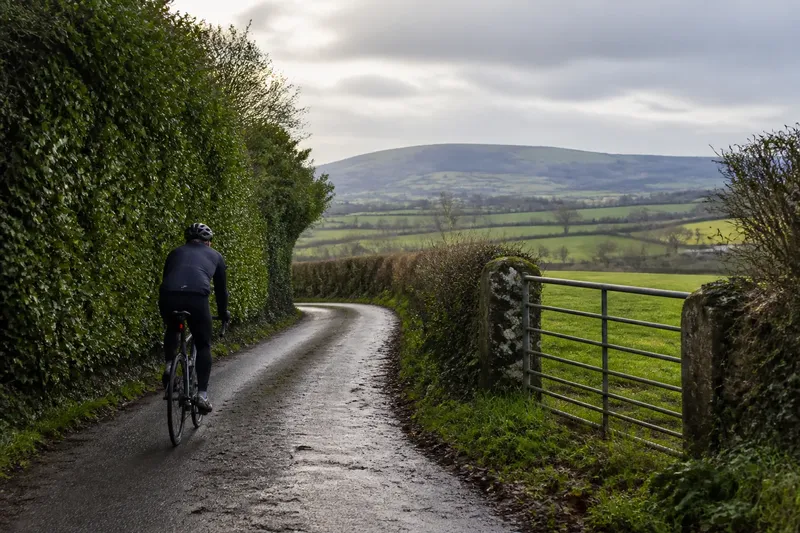
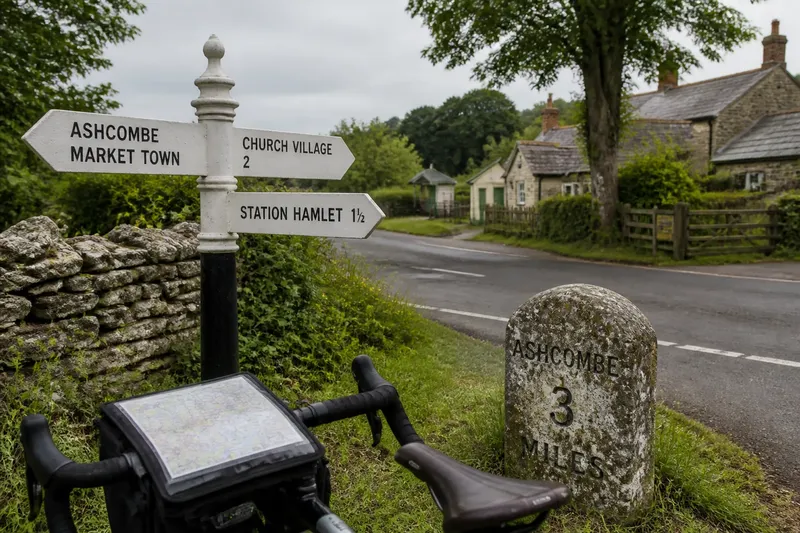
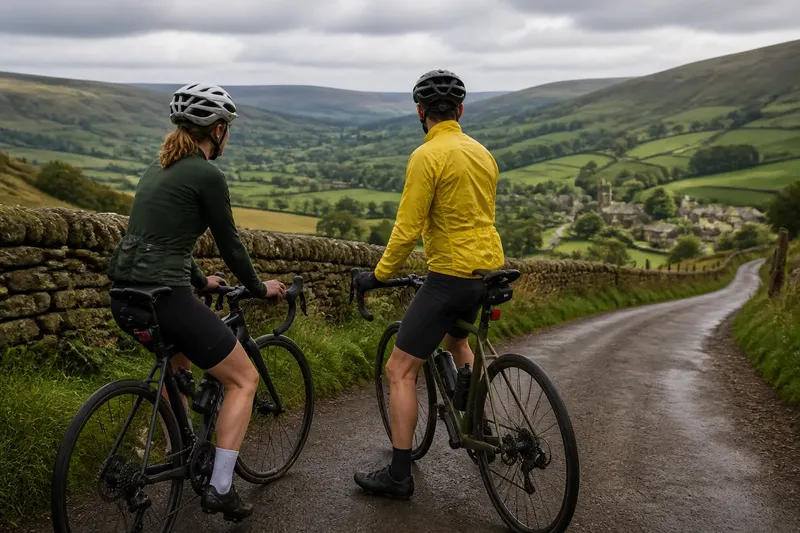
A Loop or an Out-and-Back for a Day in the Saddle?
Choose a loop or out-and-back cycling route by weighing scenery, turning points and wind exposure, so the shape of the ride suits the day.
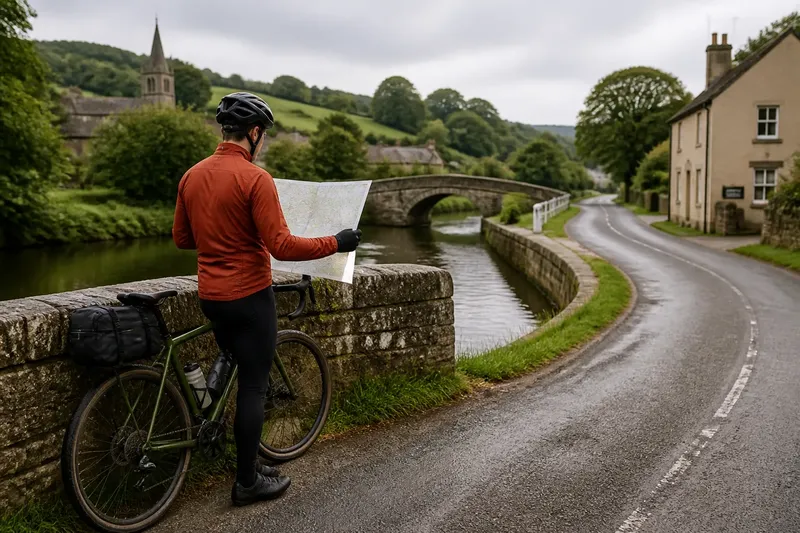
The common mistake when choosing a loop or out-and-back cycling route is to pick the loop because it looks more adventurous on a map. That can cost you the best part of the day: an easy return, a familiar view of the landscape, or the freedom to turn around before tired legs make every junction feel personal. Route shape is not a test of ambition. It is a way to arrange what you see and when you see it.
A loop returns you to the start by a different line. An out-and-back uses the same route in both directions, with a turning point somewhere along it. Either can make a satisfying day in the saddle. Choose by looking first at the experience you want, then at the roads that can provide it.
Choose the journey’s shape
Think about the ride as a sequence: leaving, settling into the countryside, reaching a turning point or landmark, and coming back. A loop gives those stages different scenery and usually a sense of continuous progress. An out-and-back makes the turnaround the central event, then lets you read familiar ground from another direction.
Ask yourself what would make the return feel right. If you want to discover a new lane almost to the end, a loop may suit you. If you want to spend time beside a river, reach a village tea room, or follow a ridge road before retracing your way, an out-and-back may be the better arrangement.
- Choose a loop when the roads form a pleasant, coherent circuit and you value changing views.
- Choose an out-and-back when one destination or stretch of countryside is the point of the ride.
- Keep both options open when the weather, daylight or your energy may change the plan.
Do not treat the two forms as a simple choice between adventurous and cautious. A loop can be short, complicated and exposed; an out-and-back can reach deep into unfamiliar countryside. The useful distinction is how each route distributes novelty, decisions and effort.
Read the map as a cyclist
Open a paper map or a route-planning app such as Komoot or Ride with GPS, and inspect the actual roads rather than the outline alone. A neat circuit can hide a busy A-road, a steep climb, a bridleway unsuitable for your bicycle, or a narrow lane with poor onward options. The line on a screen is an invitation to investigate, not evidence that the route is pleasant.
Check road surfaces, junctions and alternatives. Look for quiet lanes that connect naturally, and notice where a loop depends on one awkward section. On an out-and-back, inspect the route beyond the intended turn as well: a tempting continuation can make it harder to judge how far you have already committed.
Use an Ordnance Survey map, local authority cycling maps or a street-level map view to compare possible links. Street-level imagery can help you see whether a road appears to have a verge or whether a junction has a clear sightline, but it may be old and cannot tell you how a lane feels on the day. Local cycling groups and cafés can sometimes point to current diversions or known pinch points.
Where access depends on a sign, surface restriction or local rule, follow the sign and the relevant local guidance. A dashed line on a map does not overrule a gate, a closure notice or a land-access restriction.
Place the turning point
For an out-and-back, choose a turning point that gives the ride a reason to reach it. A village square, a bridge, a viewpoint or a café can make the end of the outward leg feel deliberate. The landmark need not be grand; a distinctive bend in a river or a church tower visible above the roofs may be enough to orient the journey.
Set the turn where there is a safe, obvious place to pause or change direction. A lay-by, public space or quiet junction is easier than an unseen driveway or a narrow road shoulder. If the destination is a café, check its opening information before building the whole ride around a cup of tea. The countryside remains open when the kettle is not.
For a loop, choose a clear midpoint even if the route has no formal destination. It might be the village where you stop for lunch, a crossing over a river, or the point where the lane begins to angle back towards your start. A midpoint helps you notice whether the ride is unfolding as intended and gives you a natural place to reconsider the return.
Say you are planning an invented ride from a railway station to a village beside a canal. You choose an out-and-back along quiet lanes, with the village bridge as the intended turn and a second public crossing earlier on as a shorter option. If the weather worsens, you can use the earlier crossing and return without needing to invent a new route while standing at a muddy junction.
Compare effort and exposure
Route shape changes how wind and climbing feel. On an out-and-back, a headwind on the outward leg may become a tailwind on the return, or the reverse; either way, the same stretch gives you a direct comparison. A loop may avoid retracing that road, but its different lanes can bring a crosswind or a climb at a less convenient point.
Use the forecast alongside the map. Check wind direction and gusts, then consider how open the route is. A road across exposed farmland offers little shelter, while a wooded lane may feel calmer but can hold damp leaves or debris. Forecasts are not precise lane-by-lane, so treat them as a reason to keep options rather than a promise about conditions.
Look at climbing as a sequence, not just a total shown by an app. On a loop, a steep rise late in the ride may be difficult to avoid if the circuit has few connecting roads. On an out-and-back, the climb you descend on the outward leg will need attention when you return uphill. If you prefer to climb while fresh, arrange the route accordingly; if you want to avoid a demanding return, choose a turning point before the steepest section.
Also consider how easy it is to shorten the day. An out-and-back offers a straightforward choice: turn earlier, then follow the same roads home. A loop can have useful cut-throughs, but only if you have checked them in advance. Marking a village or road junction as an exit point is more useful than hoping a shortcut appears when you need one.
Check the practical details
Before settling on either shape, check the start and finish. A loop is convenient when you need to return to a parked car, station or accommodation. An out-and-back is equally simple if the destination lies along the route and you are content to retrace it. If the route begins and ends in different places, confirm that transport, bicycle carriage and opening times suit your plan.
Then review the ride in the order you will encounter it:
- Start: Is there a sensible place to begin, and can you reach the first quiet road without a stressful stretch?
- Surface: Are the planned roads suitable for your bicycle and tyres, including any unsealed link?
- Junctions: Are the main turns clear on your map or device, especially where several lanes meet?
- Landmarks: Is the turnaround or midpoint visible and easy to identify from the road?
- Return: Does the final section remain manageable if you are tired or the weather changes?
- Alternatives: Have you identified a shorter route, a place to stop, or a way to reach public transport?
Save the route offline if your phone or cycling computer supports it, and carry a map or a written note of the main turns if you prefer not to depend on a battery. Tell someone your broad plan when appropriate. Keep the route flexible enough that you can pause, shorten it or take a different road if conditions require it.
Which route shape fits?
Is a loop better for seeing new scenery?
A loop usually gives you more changing views because the outward and return legs use different roads. It works best when those roads are both pleasant and connected without a difficult or uncomfortable link. If the circuit’s only purpose is to avoid retracing, a good out-and-back may be the more enjoyable ride.
Is an out-and-back easier to shorten?
Often, because you can turn around at a chosen point and return on familiar roads. That flexibility is useful when energy, weather or available daylight changes your plans. It still helps to identify safe places to pause and turn rather than making the decision at a blind bend.
How should I plan for wind?
Check the forecast, note the direction of exposed sections and decide which part of the ride you would rather face into the wind. An out-and-back makes the same road available in both directions, while a loop can vary your exposure. Neither shape removes uncertainty, so avoid making the hardest exposed section your only route home.
Can I combine a loop with an out-and-back?
Yes: ride a short out-and-back to a landmark, then complete a loop on the return, or add a small spur to an otherwise circular route. Keep the extra section easy to omit if the day changes. A route with one optional extension is often more useful than a perfect line with no alternatives.
Make the final choice
Once the roads, turning point and return options are clear, choose the shape that best serves the day. Pick a loop if the circuit itself is the attraction and its less familiar sections are worth riding. Pick an out-and-back if reaching one place, following one valley or keeping an easy exit matters more than variety. If both look equally appealing, make the decision by the return: imagine the last part of the ride when you are ready to head home.
A loop or out-and-back cycling route should leave you with a clear sense of where the journey turns, even if the plan changes along the way. Save one shorter alternative, note the landmark that marks your midpoint, and set off knowing what would make you turn back. Then the route can serve the ride, rather than asking the ride to serve the line on your screen.